
 Search Articles


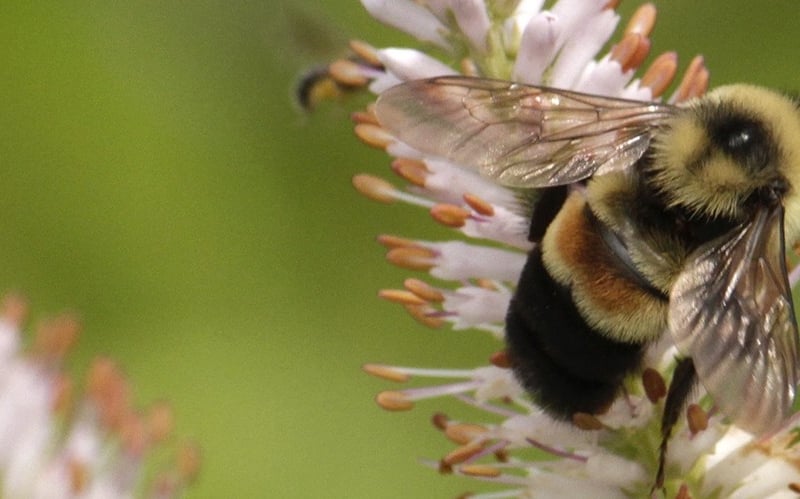
(CN) — Since bees have increasingly become endangered, people have been encouraged to plant bee gardens, maintain beehives and eliminate pesticides to try to save the bees. Scientists now have a new and detailed map of a North American bee species’ genome, which may help save the essential pollinator from extinction.
The U.S. Department of Agriculture’s Agricultural Research Service and the U.S. Fish and Wildlife Service released the newly completed genome map of the rusty patched bumblebee, or Bombus affinis , on Monday, published in the journal G3: Genes, Genomes, Genetics. Researchers have hoped that analyzing bee genomes will provide new insight on how to save the bees and help develop resources for conservation.
“Having this high-quality genome will support the identification of genetic differences between rusty patched bumble bee populations that appear to be doing well versus where they are in decline,” said entomologist Jonathan B. Uhaud Koch with the ARS Pollinating Insect-Biology, Management, Systematics Research Unit in Logan, Utah.
Part of the Beenome 100 project, the genomic sequencing of the rusty patched bumblebee gives conservationists the tools they need to better preserve the pollinators. Beenome 100, a collaboration between the ARS and the University of Illinois, aims to create a library of high-quality, detailed maps of 100 or more U.S. bee species as a conservation aid.
“We used a small piece of abdominal tissue from a single male collected from a nest in Minnesota, which, given the endangered status of the rusty patched bumble bee, seemed like a very good idea,” Koch said in a statement. “It’s only with the most cutting-edge equipment that you could resolve an entire genome of 15,252 genes and 18 chromosomes from a tiny bit of one bumble bee."
Native to the eastern and upper Midwest of the U.S. and parts of southern Canada, the rusty patched bumblebee was federally listed as endangered in 2017 and received a finalized plan for recovery in 2021. Now, the bumblebee’s range has been limited to isolated scatterings across only a couple U.S. states and Canadian provinces. Although they can still be regularly found near Minnesota and Wisconsin, their populations are estimated to have declined by 87% from historical numbers.
Pollinators like bees are an essential part of maintaining biodiversity and are necessary not only for sustaining habitats for other endangered animals, but are even needed for human survival, as many of our food crops rely on the insects to grow.
The rusty patched bumblebee is an important pollinator of crops like cranberries, apples, onions and alfalfa, along with wildflowers like milkweed and bergamot.
Environmentalists have long documented the myriad of threats faced by the rusty patched bumblebee and other endangered bee species: harmful chemicals used in modern agriculture, loss of habitat due to reduced biodiversity, exposure to pesticides, and disease and parasites.
The rusty patched bumblebee has been particularly vulnerable to the fungal pathogen Varimorpha bombi , which affects colony health and reproductive rates. Researchers discovered that 4.5% of the DNA sequenced came from the pathogen.
“That’s a massive amount of genetic information from the bee tissue sample to be associated with Varimorpha bombi . It demonstrates how pervasive the pathogen is,” Koch said.
Identifying specifics of the bees’ genome can now help environmentalists prioritize conservation efforts to prevent further loss of the rusty patched bumblebee.
“This may give us a handle on identifying the genes that give the more capable population its flexibility to deal with its environment. We may also gain a better understanding of the genetic basis of bumble bee behavior, physiology and adaptation to changing environmental conditions,” Koch said.
Subscribe to our free newsletters
Our weekly newsletter Closing Arguments offers the latest about ongoing trials, major litigation and rulings in courthouses around the U.S. and the world, while the monthly Under the Lights dishes the legal dirt from Hollywood, sports, Big Tech and the arts.